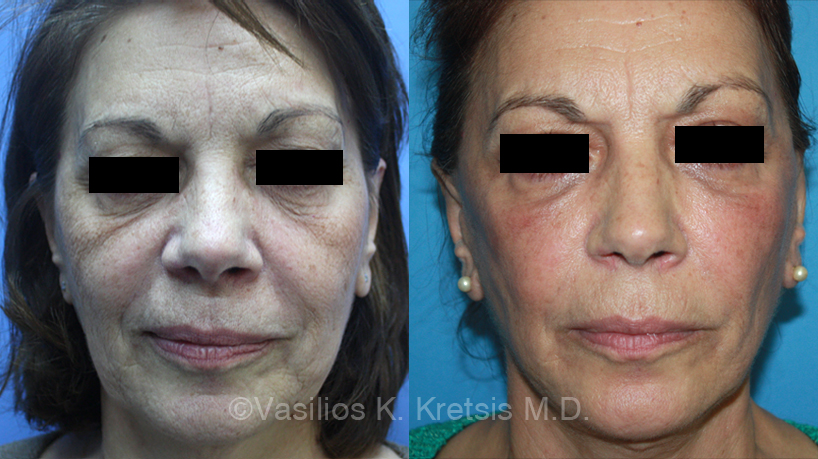
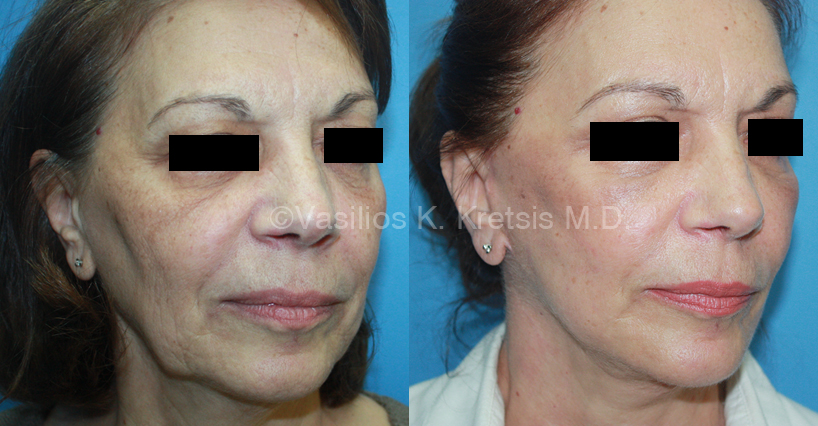
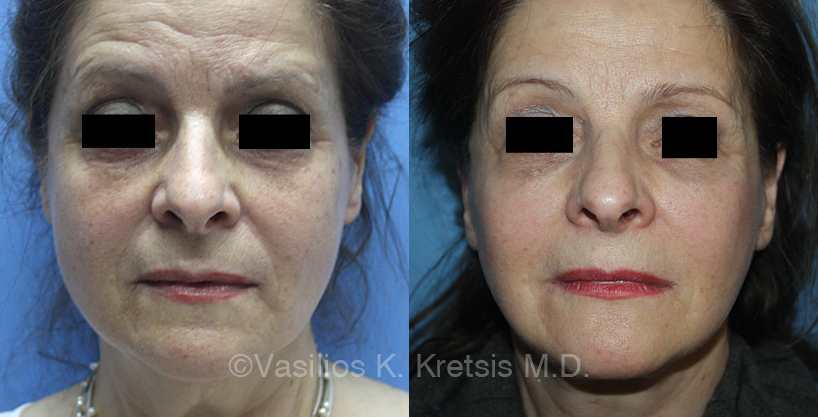
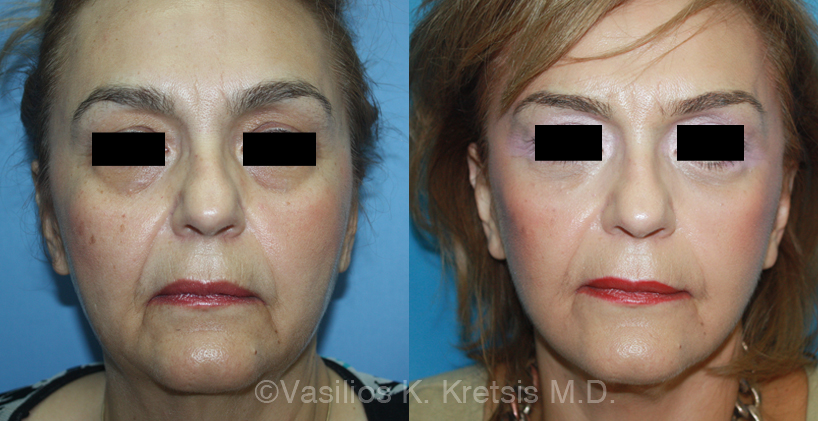
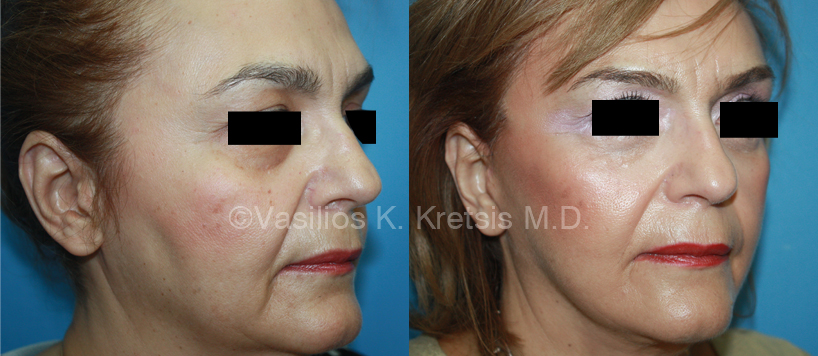
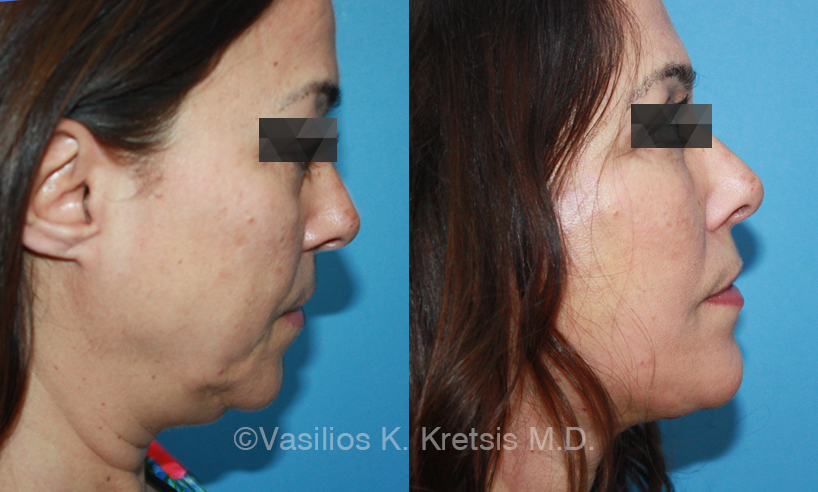
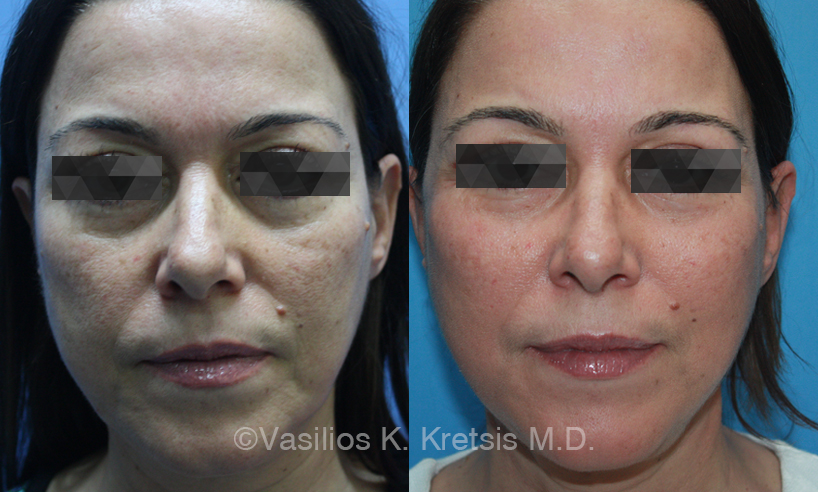
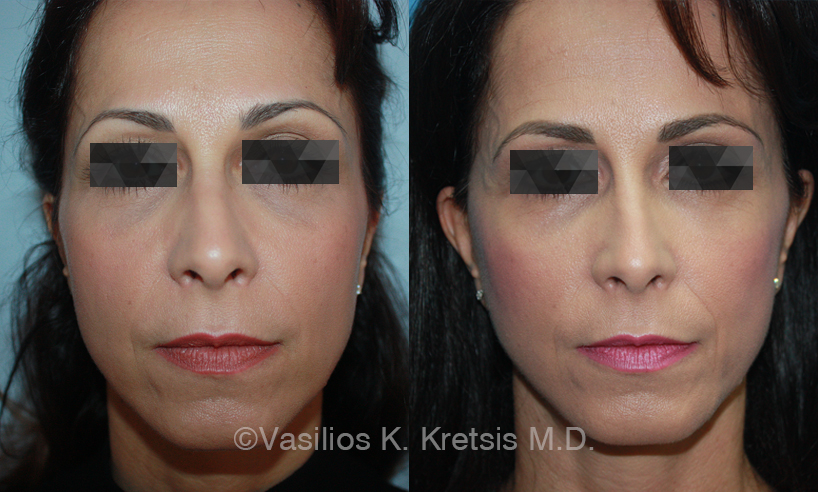
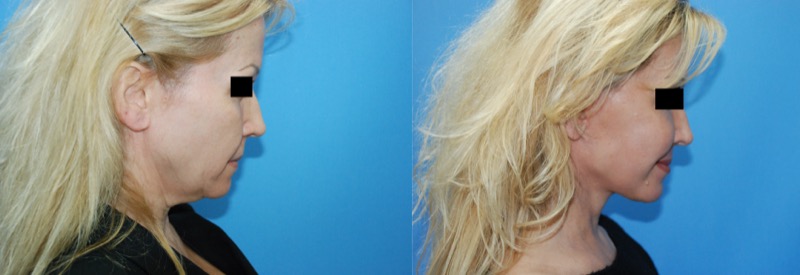
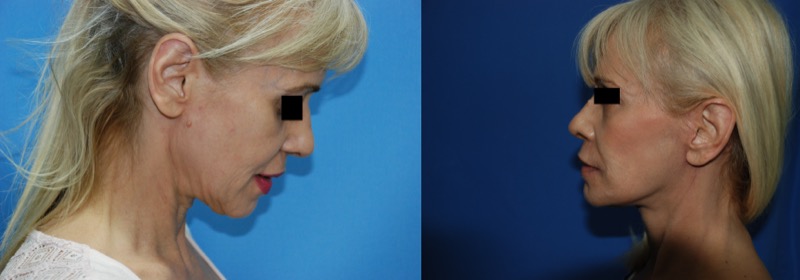
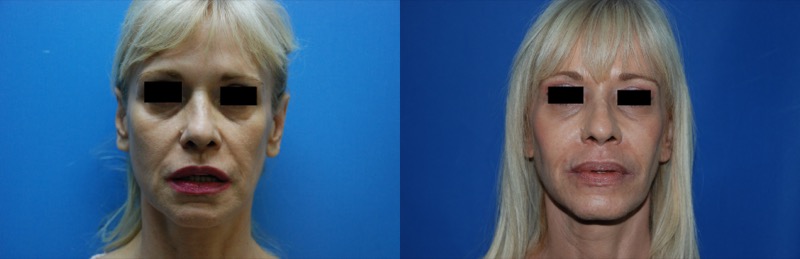
Physiology of facial aging
The facial aging starts mainly to the central oval of the face while after the sixth decade of ones life, it begins to extend to the distal oval of the human face. In the second and third decade of life, collagen and elastin as well as face fat are in high levels but gradually the first signs of face aging begin to appear: fine wrinkles in the lateral eye, wrinkles to the sides of the nose.
In the 3rd to 4th decade of life, wrinkles become more intense and the face begins slowly to lose its triangular shape. The area around and under the eyes starts now clearly to be affected by the process of aging while dark circles and bags under the eyes (see blepharoplasty) start to appear.
In the upper eyelid and the side of the eye intense excess skin raises accentuating even more a tired appearance.
The wrinkles in the sides of the nose (also known as bunny wrinkles) are now visible and the fat percentage in the area is gradually reducing. This results in the face to lose its former youth lines and to appear empty and tired. The rate of cell renewal has significantly slowed down.
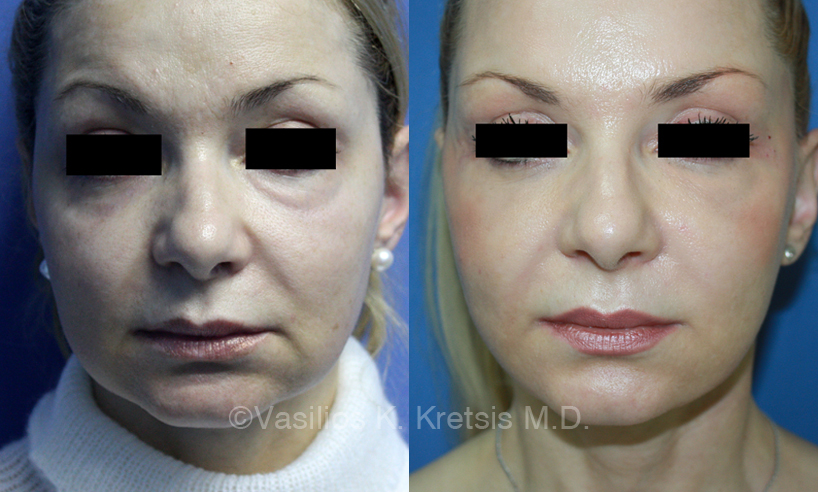
In the fifth and sixth decade of life (menopause period) we have further reduction of collagen and elastin fat levels. Furthermore, we have the appearance of osteoporosis in the facial bones resulting in the face bone structure to be slender while soft tissue structures which rest upon them begin to sag.
Up to this point the face is sagging, with bags at the lower eyelid, extensive excess skin of the upper eyelid, a sharp drooping of the corner of the eyebrow.
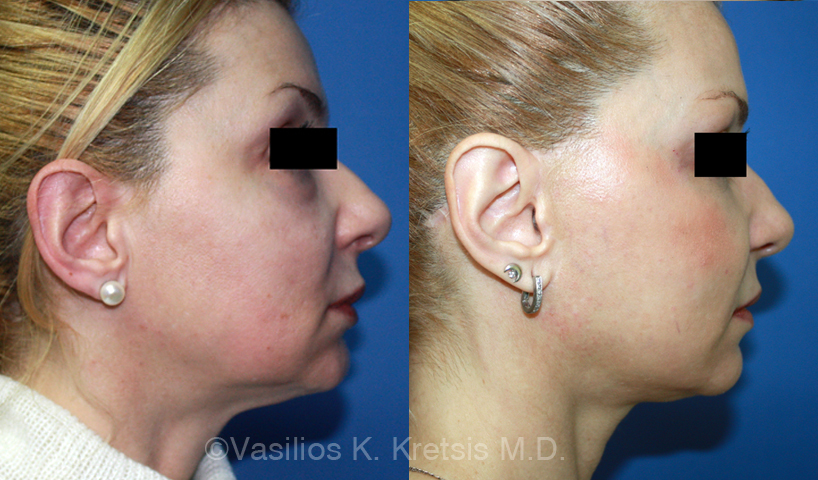
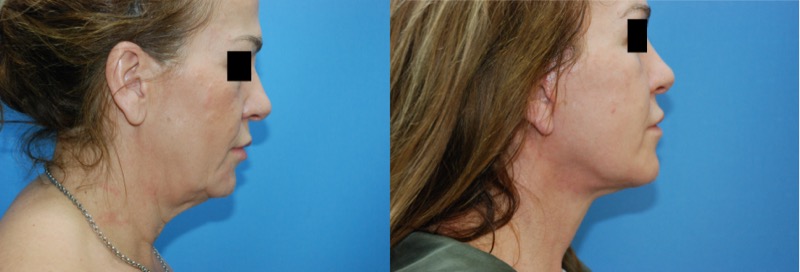
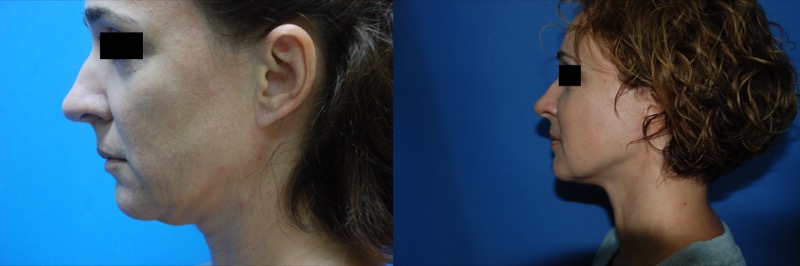
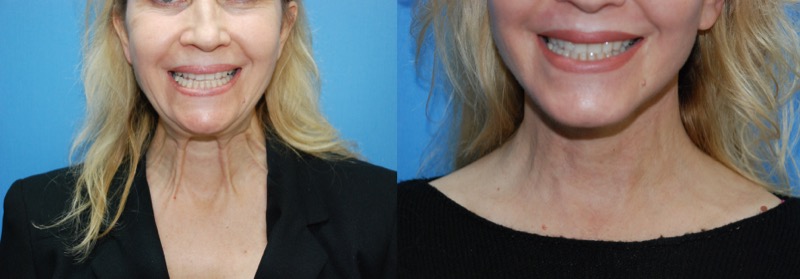
Bunny wrinkles are now not only noticeable but also drooping to the mandibular angle with formation of excess soft tissue in the corner of the jewels. Similar are the changes in the neck area with the formation of vertical wrinkles in the middle of the neck with a strong excess of skin. The neck has now lost its youthful angle of 90 ° below the jaw and the shape is an extension of the face drooping without being able to outline the deeper structures of the face (lower jaw – neck).
Collagen, elastin and fat levels are now in the lower levels.
Throughout the facial aging, skin has more of an overlapping role rather than a supportive one. The main cause of the faces droopy appearance is not the skin but the tissues below the skin.
(SMAS) superficial muscular aponeurotic system is the terminology of the tissues below the skin that cause the problem of a drooping face which makes us uncomfortable to look our image in the mirror.
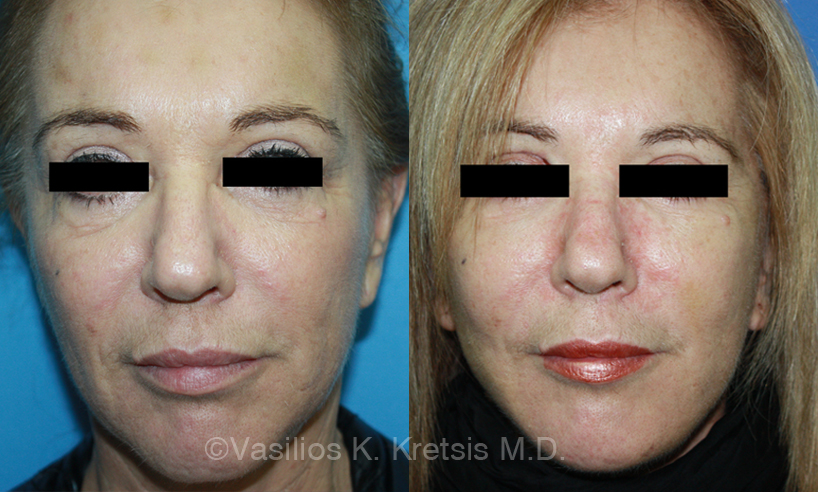
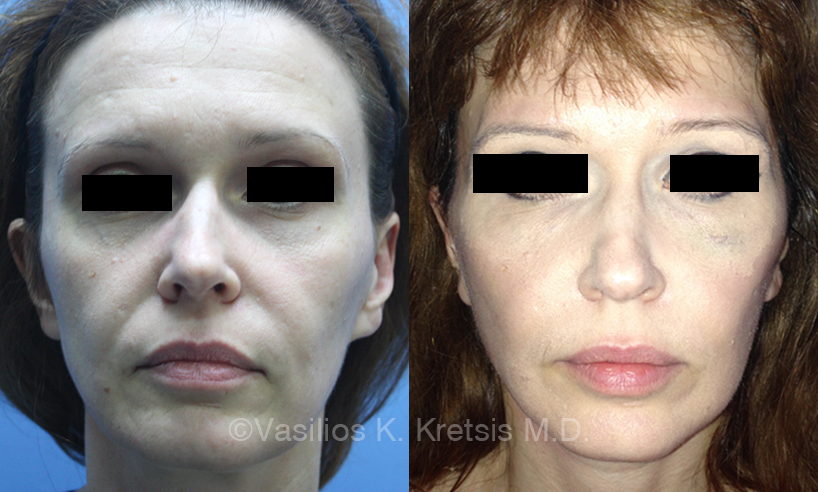
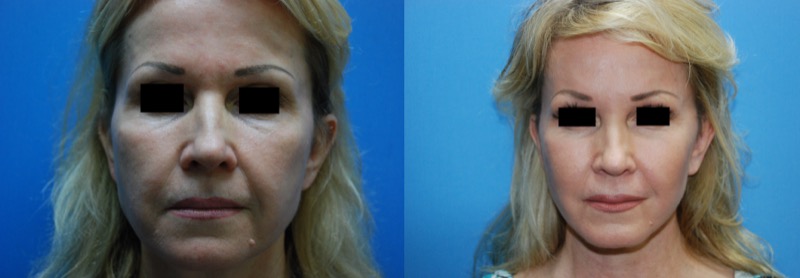
The Smas is a fibromuscular tissue located between facial muscles and skin, stretching from the hair line to the base of the neck, providing support to the face during the age of youth. The operation mobilizes and lifts SMAS to a higher position resulting to the lift of the tissues to the position they were 10-15 years ago.


 Call us: